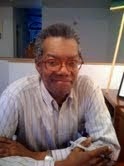
Like its predecessor, Men of Color, A Warm December, published in February [1992] by the Vega Press, offers something of interest to aficionados of each of the three genres it contains: poetry, illustrations, and photography. Also like the previous book, A Warm December, which is divided into seasonal sections, tries "to redefine the negative image [of black men] that's out there," said Lloyd Vega, the founder of the three-year-old press, "and do it in a sensual way. The books show that we're strong, compassionate; that we're lovers, brothers; that we can also be a friend, a confidante, and not a trick [illicit sex partner]."
The images found in A Warm December, contended Vega, are the very opposite of Robert Mapplethorpe's view of black men--sex objects with "the heads or arms cut off, dehumanizing us. No wonder people are afraid of us, envy us."
These pervasive negative images coupled with the dearth of books available about black gay men fueled Vega's determination to create his own publishing company. "One of my goals has been to publish new artists," said Vega, a 37-year-old Philadelphia architect, "and give them the chance that [writer-editor] Joe Beam gave me when he published an illustration by me in [the black gay anthology] In the Life." Among Vega's discoveries are w.e.s. and Jerome Whitehead, both of whom are in the new book. (A Warm December is #2 on the bookstore A Different Light/New York's bestseller list in the Men's Softcovers category.) After hearing them read their poems in a gay bar in Philadelphia, he told them he was impressed with the quality of their work and that he would like to include them in his upcoming anthology.
Vega (the name is an acronym for victory, empowerment, gratitude, assessment) sees his work as part of an ongoing effort to break the "mental chains" of self-hatred that afflicts many black gay men, self-hatred that manifests itself in black-on-black crime, drug addiction, and other self-destructive behavior. The Vega Press's chief mission is achieving for black gay men "empowerment. It's about taking control of our images, showing black male images by black photographers for a change."
Future Vega Press projects include a book of short stories, two books of poetry, and a line of greeting cards. Each endeavor will echo the sentiments of one of Vega's poems: "Respect yourself, my brother,/for we are so many wondrous things."
Vega will be reading from A Warm December as part of "Outspoken: A Gay and Lesbian Literary Series" at the Nuyorican Poets Cafe, 236 East 3rd Street, Manhattan, on April 1 [1992].
This article was originally published in NYQ magazine (April 5, 1992).
Showing posts with label Lloyd Vega. Show all posts
Showing posts with label Lloyd Vega. Show all posts
Wednesday, December 5, 2012

Wednesday, April 25, 2012
On Being A Triple Threat: Black, Male, & Gay
In Our Own Image: The Art of Black Male Photography, edited by Vega (Vega Press, 88 pp.)
In Our Own Image is a coffee table book that looks at the black male through the lenses of seven black male photographers from the United States and England. The 90-plus black-and-white photos present these models in various poses and states of undress. These well shot photos are several notches above the pornographic, stereotypical images offered to consumers of Sierra Domino and other black male nude photography series: there are no shots of genitalia or explicit sex.
Nevertheless, the photos do not, as poet Carl Cook states in the beefcake book's forward, reveal any of the qualities he believes are inherent in black males: "physical presence, grace, beauty, inner psyche, and spiritual persona." In fact, if straight people were to browse through the book, the nudity (which takes up most of the book), would reinforce their notion that gay men are sex-obsessed. It would have been better if the photographers had broadened their perspective and given us photo-essays that truly showed black men in most, if not all, of their eye-catching, exhilarating diversity--especially since this book's homoerotic images are specifically aimed at a gay audience.
In Our Own Image's editor, Vega, could have used poet/novelist Langston Hughes and photographer Roy DeCarava's 1955 book, The Sweet Flypaper of Life as a model. In that book, Hughes's words, along with DeCarava's photos of actual people, formed what has been called a "fiction-document" that tells the story of one Harlem family. Through such a forum, In Our Own Image would have been much more effective in telling potential buyers what it means to be a triple threat in this world: black, male, and gay.
This review was originally published in the Lambda Book Report (May/June 1993).
In Our Own Image is a coffee table book that looks at the black male through the lenses of seven black male photographers from the United States and England. The 90-plus black-and-white photos present these models in various poses and states of undress. These well shot photos are several notches above the pornographic, stereotypical images offered to consumers of Sierra Domino and other black male nude photography series: there are no shots of genitalia or explicit sex.
Nevertheless, the photos do not, as poet Carl Cook states in the beefcake book's forward, reveal any of the qualities he believes are inherent in black males: "physical presence, grace, beauty, inner psyche, and spiritual persona." In fact, if straight people were to browse through the book, the nudity (which takes up most of the book), would reinforce their notion that gay men are sex-obsessed. It would have been better if the photographers had broadened their perspective and given us photo-essays that truly showed black men in most, if not all, of their eye-catching, exhilarating diversity--especially since this book's homoerotic images are specifically aimed at a gay audience.
In Our Own Image's editor, Vega, could have used poet/novelist Langston Hughes and photographer Roy DeCarava's 1955 book, The Sweet Flypaper of Life as a model. In that book, Hughes's words, along with DeCarava's photos of actual people, formed what has been called a "fiction-document" that tells the story of one Harlem family. Through such a forum, In Our Own Image would have been much more effective in telling potential buyers what it means to be a triple threat in this world: black, male, and gay.
This review was originally published in the Lambda Book Report (May/June 1993).
Subscribe to:
Posts (Atom)