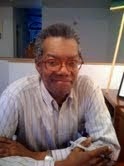
Remember when you first went to a gay bar--alone? Do you remember feeling uneasy, uncertain, and just plain scared? The late poet/novelist Melvin Dixon's short story "Boy With Beer," will help you relive that first experience.
The story, first published in a magazine called Pique, relates the experience of a young black gay student as he prepares to enter the gay bar scene, answering the call that inevitably beckons, most, if not all, gay men sooner or later.
In a cinematic style, Dixon presents the young man's life and all those who are or have been a part of it in flashbacks that interfere with his decision to come out of the closet and accept his sexual orientation.
The story is a sympathetic and realistic depiction and should be must-reading for all gay men, especially gay youth, so that they can look at themselves in a positive light and communicate that positivity to others, both gay and straight.
In a telephone conversation, Dixon indicated to me that the bar in "Boy With Beer" was inspired by Andre's, a now-defunct black gay working-class bar in Harlem. (Today, a shopping mall complex that includes the Magic Johnson movie theatre sits on that site.)
Melvin Dixon, who was a professor of English at Queens College, City University of New York and the author of numerous poems and two novels, would have been very pleased to learn that "Boy With Beer" had been read by actor Courtney Vance on the stage of New York's Symphony Space theatre for broadcast on public radio's short story series, Selected Shorts.
NOTE: Parts of this edited version was taken from the 1984 first draft of a proposed introduction to "Boy With Beer," possibly for the black gay and lesbian supplement I guest edited for the New York Native. A sentence in the first paragraph of the draft states that Dixon's short story was being "reprinted for the first time with the permission of its author." The story never appeared in the supplement, instead a poem by Dixon was included in the supplement's poetry centerfold. The poetry centerfold was a first for the Native. They never did another one. This draft (a typescript) was dated April 22, 1984.
Showing posts with label Gay Bars. Show all posts
Showing posts with label Gay Bars. Show all posts
Saturday, August 2, 2014

Thursday, May 22, 2014
An Etiquette Book For Young Gay Men
One Saturday evening in February of this year, my friend Robert and I stopped by the Suite, a gay bar on Amsterdam Avenue at 109th Street in the Morningside Heights area of Manhattan to relax and chat while sipping sodas. On a small table near the entrance were several paperback copies (free) of a self-published book called The Essential Sex Venue Etiquette and Resource Guide: For America's Gay and Bisexual Young Men by Robert Brandon Sandor. Browsing through the book (or pamphlet as the author described it), I was particularly fascinated by the glossary which contained many unfamiliar terms such as "bat boy" ("A boy that loves large penises") and "teabagging" ("Placing one's testicles down onto someone's mouth or forehead").
A guidebook such as this one would have been useful to and probably appreciated by previous generations of gay men who had to learn the ropes through trial and error.
I plan to write a much more thorough review of the guidebook for this blog later on.
A guidebook such as this one would have been useful to and probably appreciated by previous generations of gay men who had to learn the ropes through trial and error.
I plan to write a much more thorough review of the guidebook for this blog later on.
Thursday, February 2, 2012
The Night They Raided Blue's
The vicious police raid at Blue's on the night of September 29, 1982 showed New York's Finest at their very worst. It is certainly a night patrons of the black gay bar on West 43rd Street will not soon forget. Since the raid, business has fallen off one-third to one-half. That should attest to the brutality that was meted out.
The police story is that they were responding to a ten-thirteen--an officer in trouble call--when six of their men were beaten up inside the bar after arriving there to stop a fistfight. Lew Olive, the bar manager on the 8 pm to 4 am shift, was there that ill-fated night and denied there was a fight and that there were six cops in the bar. He said that from different sources he found out that "One or two drag queens did beat up one or two policemen out there on the street" and to retaliate, the police raided Blue's. But, continued Olive, a friend of his was told by a policeman that "those drag queens do not come to this bar and he knows that as a fact."
Olive said he told one policeman at Midtown South, "If your story is correct and if we did beat up six police, that's a felony. You had us against the wall. You could have identified the assailants of those six police." Olive accused the cop of dereliction of duty for not arresting the assailants if they knew them to be in the bar at the time.
"We know as a fact," said Olive, that they [the cops] did gather in Smith's Bar [located at 44th Street and Eighth Avenue] and they proceeded from Smith's Bar to here after drinking in Smith's Bar. Those are damaging facts and that's no way to answer a ten-thirteen."
The raid "left at least ten people seriously injured," said Olive. Among them were two young black men, one of whom had four teeth knocked out. Olive would like the two men to get in touch with Blue's to get medical and/or legal assistance. (Olive himself was hit on the head two or three times with a blackjack.)
Olive showed displeasure with the lack of interest on the part of the Daily News and the Times--which is across the street--to send a reporter and a photographer over to cover the story when they were notified of the raid. He also had some harsh words for Arthur Bell's piece in the Village Voice. He called it "irresponsible" and "poor journalism" because Bell published a couple of quotes he didn't bother to substantiate. For example, "When he talked to the New York Times lady out on the street, the lady says she was called certain names and said things [to] by patrons from this bar. Bell's question should be, 'How do you know they were patrons from this bar?' Now this white woman saw black people and they associate all black people to this bar and that's ridiculous. All black people in this area do not come in this bar."
In fact, said Olive, Blue's despite its predominately black clientele, is open to anyone wanting to buy a drink there. "We insist that they be treated as they act. And we do not allow any customer here to tell another they don't belong here because they aren't this, that or the other. We don't care whether they're lesbian, gay, drag queen, or what."
At the present time, there are several agencies conducting separate investigations into the raid, among them the FBI--Olive called them in because "I'm not comfortable with the police investigating police."--the New York Civil Liberties Union, and the Police Civilian Complaint Review Board. "All the agencies that we can get involved in this case," said Olive, "we want to be involved in this case." The management of Blue's intends to pursue the legal battle even if it takes five years.
The police story is that they were responding to a ten-thirteen--an officer in trouble call--when six of their men were beaten up inside the bar after arriving there to stop a fistfight. Lew Olive, the bar manager on the 8 pm to 4 am shift, was there that ill-fated night and denied there was a fight and that there were six cops in the bar. He said that from different sources he found out that "One or two drag queens did beat up one or two policemen out there on the street" and to retaliate, the police raided Blue's. But, continued Olive, a friend of his was told by a policeman that "those drag queens do not come to this bar and he knows that as a fact."
Olive said he told one policeman at Midtown South, "If your story is correct and if we did beat up six police, that's a felony. You had us against the wall. You could have identified the assailants of those six police." Olive accused the cop of dereliction of duty for not arresting the assailants if they knew them to be in the bar at the time.
"We know as a fact," said Olive, that they [the cops] did gather in Smith's Bar [located at 44th Street and Eighth Avenue] and they proceeded from Smith's Bar to here after drinking in Smith's Bar. Those are damaging facts and that's no way to answer a ten-thirteen."
The raid "left at least ten people seriously injured," said Olive. Among them were two young black men, one of whom had four teeth knocked out. Olive would like the two men to get in touch with Blue's to get medical and/or legal assistance. (Olive himself was hit on the head two or three times with a blackjack.)
Olive showed displeasure with the lack of interest on the part of the Daily News and the Times--which is across the street--to send a reporter and a photographer over to cover the story when they were notified of the raid. He also had some harsh words for Arthur Bell's piece in the Village Voice. He called it "irresponsible" and "poor journalism" because Bell published a couple of quotes he didn't bother to substantiate. For example, "When he talked to the New York Times lady out on the street, the lady says she was called certain names and said things [to] by patrons from this bar. Bell's question should be, 'How do you know they were patrons from this bar?' Now this white woman saw black people and they associate all black people to this bar and that's ridiculous. All black people in this area do not come in this bar."
In fact, said Olive, Blue's despite its predominately black clientele, is open to anyone wanting to buy a drink there. "We insist that they be treated as they act. And we do not allow any customer here to tell another they don't belong here because they aren't this, that or the other. We don't care whether they're lesbian, gay, drag queen, or what."
At the present time, there are several agencies conducting separate investigations into the raid, among them the FBI--Olive called them in because "I'm not comfortable with the police investigating police."--the New York Civil Liberties Union, and the Police Civilian Complaint Review Board. "All the agencies that we can get involved in this case," said Olive, "we want to be involved in this case." The management of Blue's intends to pursue the legal battle even if it takes five years.
Author's Note: I wrote the above article about the police raid at the black gay bar called Blue's in 1982. It was never published, as far as I can recall, in any gay newspaper. I started submitting articles and book reviews to gay publications around 1982.
Tuesday, December 7, 2010
Discrimination At The Union Club, 1983
Black and White Men Together/New York [later renamed Men of All Colors Together], an interracial gay anti-racism group, after nearly three months, has emerged victorious in the fight against the Union Club's discriminatory admission policy. After initially denying such a policy, the East Village gay bar and disco has agreed to meet all four of BWMT's demands. The demands are an apology to all those it has discriminated against including four black young men from BWMT (Charles Brack, Lawrence Dubose, Alfredo Perez, and Donald Reid) who were sent, along with four white members, to "test" the club's admission policy on August 12, 1983; the elimination of its discriminatory admission policy; compensation of the victims by making a substantial financial contribution to BWMT's Discrimination Documentation Project; and the hiring of Third World people as bartenders, waiters, bouncers, etc.
In BWMT's newsletter for November, it was announced that the Union Club has agreed to make a $2,000 contribution to compensate the victims. The club's manager, John Addison, previously stated that the club could not afford to make a financial contribution but BWMT refused to take the statement seriously. It is their belief that one way to put an end to discriminatory admission policies is to make the practice of it very costly to bar and disco owners. They see their victory at the Union Club as a way "to show the community as well as other bar owners that a multi-racial, non-discriminatory bar can survive and prosper in this community. Our goal," continues the newsletter, "is not to put gay establishments out of business; it is more important that we prove we don't have to endure discriminatory actions."
The settlement came four days after BWMT held a joint press conference and demonstration outside the club, located at 110 East 14th Street, on October 13.
Final payment of the compensation was scheduled to be made on or before October 31, 1983. BWMT plans to go back to the club in a few weeks to see if it is complying with the agreement.
In a letter published in the gay newspaper, the New York Native, John Addison, the club's manager, called the situation at the door August 12 a "misunderstanding." He invited the four black BWMT members "to return to the Union Club as my guest for the evening of their choice." Interestingly, the letter was dated October 12, the day before the press conference and demonstration during which he denied being a discriminator. Lidell Jackson, BWMT's press liaison, believes Addison's letter and his unsuccessful attempt to upstage BWMT at its own press conference by trying to hog press attention is his "way of trying to use the press to his best advantage."
However, articles in the New York Native about the club persuaded Dignity, a gay Catholic group, to cancel and reschedule its 11th anniversary party which it was going to hold at the Union Club on October 21.
In a related story reported by the Washington Blade, another gay newspaper, in its October 14 issue, the Washington, D.C. chapter of BWMT has dropped its complaint of discrimination against Badlands, a local gay bar and disco, which it had filed with D.C. Office of Human Rights. The complaint was filed on July 14, reports the Blade, after BWMT/DC received "a number of reports from local black Gays that Badlands was requiring blacks to show identification for proof -of-age while whites were not required to show such proof." The bar, says the Blade, "has agreed to contribute $5,000 to a Gay operated anti-discriminatory program."
Note: David Kaufman's the root.com article, "Logo's 'The A-List': A Symbol of Gay Apartheid?" (December 6, 2010) complains that "[t]he same-sex reality-TV show is set in New York but has no black lead characters. Not unusual in a gay world that is routinely segregated by race."
Anyone familiar with the gay world is not surprised by the lack of color-blindness in the gay community. It's nothing new as my above article, written in November of 1983, underscores.
In BWMT's newsletter for November, it was announced that the Union Club has agreed to make a $2,000 contribution to compensate the victims. The club's manager, John Addison, previously stated that the club could not afford to make a financial contribution but BWMT refused to take the statement seriously. It is their belief that one way to put an end to discriminatory admission policies is to make the practice of it very costly to bar and disco owners. They see their victory at the Union Club as a way "to show the community as well as other bar owners that a multi-racial, non-discriminatory bar can survive and prosper in this community. Our goal," continues the newsletter, "is not to put gay establishments out of business; it is more important that we prove we don't have to endure discriminatory actions."
The settlement came four days after BWMT held a joint press conference and demonstration outside the club, located at 110 East 14th Street, on October 13.
Final payment of the compensation was scheduled to be made on or before October 31, 1983. BWMT plans to go back to the club in a few weeks to see if it is complying with the agreement.
In a letter published in the gay newspaper, the New York Native, John Addison, the club's manager, called the situation at the door August 12 a "misunderstanding." He invited the four black BWMT members "to return to the Union Club as my guest for the evening of their choice." Interestingly, the letter was dated October 12, the day before the press conference and demonstration during which he denied being a discriminator. Lidell Jackson, BWMT's press liaison, believes Addison's letter and his unsuccessful attempt to upstage BWMT at its own press conference by trying to hog press attention is his "way of trying to use the press to his best advantage."
However, articles in the New York Native about the club persuaded Dignity, a gay Catholic group, to cancel and reschedule its 11th anniversary party which it was going to hold at the Union Club on October 21.
In a related story reported by the Washington Blade, another gay newspaper, in its October 14 issue, the Washington, D.C. chapter of BWMT has dropped its complaint of discrimination against Badlands, a local gay bar and disco, which it had filed with D.C. Office of Human Rights. The complaint was filed on July 14, reports the Blade, after BWMT/DC received "a number of reports from local black Gays that Badlands was requiring blacks to show identification for proof -of-age while whites were not required to show such proof." The bar, says the Blade, "has agreed to contribute $5,000 to a Gay operated anti-discriminatory program."
Note: David Kaufman's the root.com article, "Logo's 'The A-List': A Symbol of Gay Apartheid?" (December 6, 2010) complains that "[t]he same-sex reality-TV show is set in New York but has no black lead characters. Not unusual in a gay world that is routinely segregated by race."
Anyone familiar with the gay world is not surprised by the lack of color-blindness in the gay community. It's nothing new as my above article, written in November of 1983, underscores.
Wednesday, July 15, 2009
The Most Sensational Bartender in the World
The Most Sensational Bartender in the World
is Joel.
He stands beneath a ceiling
of red and pink balloons,
popping tops off the necks
of Coronas, Heineken, Amstel Light.
That is sensational.
I love him with his puppy-brown eyes,
his boyish charm.
He really sends me...sensationally.
He doesn't notice me across the dance floor
of swirling lights,
under the dimensional reflections
of disco balls.
He pronounces his name "Joelle."
How cute is that?
How cute and sensational is that?
He makes the best vodka sea breezes.
Pouring liquor into the anxious mouth of my glass,
sticking a slice of lemon on the side with his wet
fingers.
That is the most sensational thing ever.
I'm not interested in shoving dollar bills
in g-strings flossing the sweet-glossed asses
of go-go boys with their warm, hanging dicks.
But would rather put my hard earned bucks
in Joelle's sensational dark-blue tank top.
I admire him from afar at the end of the bar.
Watch him make magical martinis,
being that he is the most sensational bartender in the world.
--Shane Allison
Shane Allison lives in Tallahassee, Florida and is the author of five chapbooks of poetry, including I Want to Fuck a Redneck. He has had poems and stories published in Best Gay Erotica, Queer Connection, RFD, Velvet Mafia, Best Gay Erotica, Ultimate Gay Erotica, Best Gay Love Stories, and many others. He is the editor of Hot Cops: Gay Erotic Stories.
is Joel.
He stands beneath a ceiling
of red and pink balloons,
popping tops off the necks
of Coronas, Heineken, Amstel Light.
That is sensational.
I love him with his puppy-brown eyes,
his boyish charm.
He really sends me...sensationally.
He doesn't notice me across the dance floor
of swirling lights,
under the dimensional reflections
of disco balls.
He pronounces his name "Joelle."
How cute is that?
How cute and sensational is that?
He makes the best vodka sea breezes.
Pouring liquor into the anxious mouth of my glass,
sticking a slice of lemon on the side with his wet
fingers.
That is the most sensational thing ever.
I'm not interested in shoving dollar bills
in g-strings flossing the sweet-glossed asses
of go-go boys with their warm, hanging dicks.
But would rather put my hard earned bucks
in Joelle's sensational dark-blue tank top.
I admire him from afar at the end of the bar.
Watch him make magical martinis,
being that he is the most sensational bartender in the world.
--Shane Allison
Shane Allison lives in Tallahassee, Florida and is the author of five chapbooks of poetry, including I Want to Fuck a Redneck. He has had poems and stories published in Best Gay Erotica, Queer Connection, RFD, Velvet Mafia, Best Gay Erotica, Ultimate Gay Erotica, Best Gay Love Stories, and many others. He is the editor of Hot Cops: Gay Erotic Stories.
Subscribe to:
Posts (Atom)