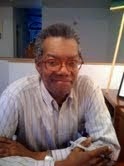
The following essay is by Leonard Green, a gay syndicated columnist, freelance writer, and political strategist. He is the publisher and editor of The Right Angle, a conservative newsletter.
When an effeminate man or a masculine woman walks down the street heads turn. People assume they are gay. Some are not. Those who are gay face discrimination and ridicule not only in the straight world but also in the gay community. Historically effeminate gay men and masculine lesbians have taken the heat while many lesbians and gays have been in the closet. They have suffered physical and verbal abuse while on the front line fighting for our rights. But instead of seeing them as heroes and heroines, we attempt to disregard them.
Masculine gay men and effeminate lesbians are threatened by them. Those lesbians and gays whose sexuality is not obvious feel they project the wrong image. They argue that these non-traditional behaviors misrepresent the gay community and makes it difficult for gays and lesbians to be accepted.
Like many heterosexuals, "straight-acting" homosexuals assume effeminate men are attempting to be women and masculine lesbians are attempting to be men. Michael Sainte-Andress, a seasoned activist, says they "are living a fantasy." Sainte-Andress, who is effeminate, says, "Anytime you are outside the reality of what you are, it's a fantasy. I have lived a fantasy for a large portion of my life by choice and understand the ramifications. People can live fantasies but [must] prepare to accept the consequences."
Contrary to this attitude, many are merely being themselves. Some are pretending but so are some "macho gay men" and "lipstick lesbians." Curtis, a 31-year-old personnel analyst who does not want his last name identified, says "I'm sure in every gay man's lifestyle, beyond closed doors or with a bunch of friends, they may do and say feminine things. But it's kind of like I'm performing. When I'm out in public, this is where it stops." Many gays and lesbians refuse to associate with them in public. To do so would painfully remind them that they are connected by the same common thread."I don't have anything against them," says Curtis, " but that is a group I keep a distance from. In a large gathering I will associate with them and maybe in conversation. But I will not get involved with them because of society's roles."
When choosing a mate, many "straight-acting" gays and lesbians overlook effeminate men or masculine women because they do not consider them "real" men and women. They also fear that involvement with them will cause people to assume or wonder whether they too are gay. Fortunately, some gays and lesbians understand the danger of condemning others. Cherisse Gardner, 34, says, "I have a couple of cousins who are effeminate men. I know better than to criticize them. They are different." She adds, "If you catch me out in a dress and heels, I feel I'm in drag even though I'm a woman."
Activists talk about hate crimes, domestic partnership, the repeal of sodomy laws, and homophobia, but they seldom discuss discrimination against effeminate men and masculine women, many of whom are excluded from social circles. Many are denied employment and other opportunities, even by gays and lesbians who feel they do not fit the proper corporate image. "Black gay men should not discriminate against feminine people," says Sainte-Andress. He suggests that those who do should be given "a mind injection that would propel them to think differently."
We must recognize the tremendous value of our community. We should not be limited by stereotypical attitudes about male and female behavior. We must not condemn each other in our quest for acceptance.
Showing posts with label Discrimination. Show all posts
Showing posts with label Discrimination. Show all posts
Thursday, December 10, 2015

Saturday, December 28, 2013
BWMT'S Discrimination Documentation Project
Mitchell Karp, a 28-year-old white lawyer, is a member of Black and White Men Together/New York* and its Discrimination Documentation Project is part of BWMT's efforts to fight racism in the gay community.
Karp is also a staff counselor at Good Old Lower East Side, Inc. (G.O.L.E.S.), a neighborhood preservation company that serves Lower East Side tenants.
Charles Michael Smith: What is your association with the Discrimination Documentation Project?
Mitchell Karp: As a member of Black and White Men Together [who] has recently taken on responsibility as co-chairman for the Political Action Committee, my affiliation is to oversee the Discrimination Documentation Project with the co-chair James Credle. But my other association with the [DDP] is that I serve as one of a number of attorneys that represent BWMT and the complainants in litigation under the [DDP].
Anyone can be a member of BWMT and anyone can be a member of the project if they're willing to go through the procedure of coming to political action committee meetings. It's an open organization and we solicit input from all members of the gay community. People who call up to complain about racial discrimination are not solely members [of BWMT]. They've heard about it, they've read about it, their friends have told them.
CMS: How did the project originate?
MK: The project was originated by, I believe, the political action committee. At that time, the people that I know that were involved were Henry Wiemhoff, James Credle, and Glenn Rickles. Rickles is an attorney and I think he played a pivotal role in formulating a lot of the guidelines. It was modeled after the NAACP and HUD (Housing and Urban Development), I believe, housing testers. A lot of the same principles and practices were implemented. I was not involved when it was planned so a lot of my knowledge of the history of the project comes through word of mouth. It started in 1980, '81, I believe. The first documentation was at Circles which was a gay bar on the Upper East Side. Eight people were sent in sets of four couples. Two blacks, two whites, two blacks, two whites. All the blacks were stopped and told they had to fill out membership applications and while they were standing there writing out the forms which required information like bank accounts, three friends, names of other members, the four whites, both sets of couples, were welcomed in and asked if they wanted to be on the mailing list. And that was very successful because the first night that we set up the picket line the bar acknowledged responsibility, committed themselves to apologizing to the black members, made a five-hundred-dollar donation to the project and invited everyone in and went through the whole admission of discrimination. I think that was crucial to the success of the project. The bar then changed and became a straight bar called Gotham and then it closed. But we did follow up the project by returning to Circles about six weeks after the demonstration to test once again its policies and, sure enough, all the testers, both black and white, were admitted with no questions asked.
Note: The organization was later renamed Men of All Colors Together (MACT).
The above Q & A interview is an excerpt from an article that was originally published in the New York Native in 1983.
Saturday, June 30, 2012
Capitalism On Display
On June 12, I attended the 34th annual Museum Mile Festival. That evening, all the museums along Fifth Avenue in Manhattan, from 82nd to 104th Streets are free of charge to the public for three hours (6-9 pm).
I would have enjoyed the event more if it hadn't rained. Part of the fun of attending the Museum Mile Festival is the street activity: jugglers, musicians, street vendors, etc.
The Museum of the City of New York had a fascinating exhibit called "Capital of Capital: New York's Banks and the Creation of a Global Economy." One exhibit that especially caught my attention was a letter to the editor of the New York Amsterdam News, written in 1958, regarding the difficulty of African-Americans to obtain bank loans. Hence the creation of Carver Bank, an African-American-owned financial institution.
Tuesday, December 7, 2010
Discrimination At The Union Club, 1983
Black and White Men Together/New York [later renamed Men of All Colors Together], an interracial gay anti-racism group, after nearly three months, has emerged victorious in the fight against the Union Club's discriminatory admission policy. After initially denying such a policy, the East Village gay bar and disco has agreed to meet all four of BWMT's demands. The demands are an apology to all those it has discriminated against including four black young men from BWMT (Charles Brack, Lawrence Dubose, Alfredo Perez, and Donald Reid) who were sent, along with four white members, to "test" the club's admission policy on August 12, 1983; the elimination of its discriminatory admission policy; compensation of the victims by making a substantial financial contribution to BWMT's Discrimination Documentation Project; and the hiring of Third World people as bartenders, waiters, bouncers, etc.
In BWMT's newsletter for November, it was announced that the Union Club has agreed to make a $2,000 contribution to compensate the victims. The club's manager, John Addison, previously stated that the club could not afford to make a financial contribution but BWMT refused to take the statement seriously. It is their belief that one way to put an end to discriminatory admission policies is to make the practice of it very costly to bar and disco owners. They see their victory at the Union Club as a way "to show the community as well as other bar owners that a multi-racial, non-discriminatory bar can survive and prosper in this community. Our goal," continues the newsletter, "is not to put gay establishments out of business; it is more important that we prove we don't have to endure discriminatory actions."
The settlement came four days after BWMT held a joint press conference and demonstration outside the club, located at 110 East 14th Street, on October 13.
Final payment of the compensation was scheduled to be made on or before October 31, 1983. BWMT plans to go back to the club in a few weeks to see if it is complying with the agreement.
In a letter published in the gay newspaper, the New York Native, John Addison, the club's manager, called the situation at the door August 12 a "misunderstanding." He invited the four black BWMT members "to return to the Union Club as my guest for the evening of their choice." Interestingly, the letter was dated October 12, the day before the press conference and demonstration during which he denied being a discriminator. Lidell Jackson, BWMT's press liaison, believes Addison's letter and his unsuccessful attempt to upstage BWMT at its own press conference by trying to hog press attention is his "way of trying to use the press to his best advantage."
However, articles in the New York Native about the club persuaded Dignity, a gay Catholic group, to cancel and reschedule its 11th anniversary party which it was going to hold at the Union Club on October 21.
In a related story reported by the Washington Blade, another gay newspaper, in its October 14 issue, the Washington, D.C. chapter of BWMT has dropped its complaint of discrimination against Badlands, a local gay bar and disco, which it had filed with D.C. Office of Human Rights. The complaint was filed on July 14, reports the Blade, after BWMT/DC received "a number of reports from local black Gays that Badlands was requiring blacks to show identification for proof -of-age while whites were not required to show such proof." The bar, says the Blade, "has agreed to contribute $5,000 to a Gay operated anti-discriminatory program."
Note: David Kaufman's the root.com article, "Logo's 'The A-List': A Symbol of Gay Apartheid?" (December 6, 2010) complains that "[t]he same-sex reality-TV show is set in New York but has no black lead characters. Not unusual in a gay world that is routinely segregated by race."
Anyone familiar with the gay world is not surprised by the lack of color-blindness in the gay community. It's nothing new as my above article, written in November of 1983, underscores.
Tuesday, September 29, 2009
Walking In A Black Person's Shoes
Those whites, who complain about blacks playing the race card and who see racism as part of a bygone era, should follow in the footsteps of the late white journalist John Howard Griffin, the author of Black Like Me: disguise themselves as blacks for a week or two, if they're brave enough to attempt it. I think the experience would give them a whole new perspective on race in America.
Subscribe to:
Posts (Atom)