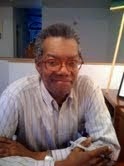
Whenever my friend and upstairs neighbor Scotty Crawford (now deceased) referred to the police as "Miss Alice," I thought it was a humorous name he had made up. I learned later from a book about the 1969 Stonewall Riots in New York's Greenwich Village that gay men back then called cops "Alice Blue Gown."
Showing posts with label Stonewall Riots. Show all posts
Showing posts with label Stonewall Riots. Show all posts
Tuesday, May 6, 2025

Monday, January 7, 2019
There Is No Disgrace Having A Gay Child
During this summer's celebration of the 50th anniversary of the Stonewall uprising in the Greenwich Village section of New York, there should be banners printed with the following quotation:
"I want other parents to see that it is no disgrace having a gay child. The disgrace is when you try to put it [the child's homosexuality] in the closet. Your children are coming out, now it is your turn to come out."--Dorothy Beam, writer/anthology editor Joseph Beam's mother (1924-2018), quoted in The Washington Post, August 1991.
"I want other parents to see that it is no disgrace having a gay child. The disgrace is when you try to put it [the child's homosexuality] in the closet. Your children are coming out, now it is your turn to come out."--Dorothy Beam, writer/anthology editor Joseph Beam's mother (1924-2018), quoted in The Washington Post, August 1991.
Wednesday, June 13, 2018
Happy Pride Month 2018
I hope everyone has a happy pride month.
I'm looking forward to Stonewall 50 next year when we celebrate the 50th anniversary of the Stonewall uprising in Greenwich Village.
I'm looking forward to Stonewall 50 next year when we celebrate the 50th anniversary of the Stonewall uprising in Greenwich Village.
Saturday, January 27, 2018
Get Ready For Stonewall 50!!
June 2019 will mark the fiftieth anniversary of the Stonewall riots in New York. Like the rainbow flag, the riots have a symbolic meaning within the LGBT community.
No doubt every cultural institution in the city will be doing their part to celebrate that momentous event considered by many to be the beginning of the modern gay rights movement. And no doubt the Gay Pride Parade will be super, super long in commemorating Stonewall.
About a year ago, I decided to visit the Stonewall Inn for the first time. I knew that the interior of the bar wouldn't resemble what it looked like in 1969 but that didn't matter.What was important was the fact that I was standing in an historic place that had brought about historic consequences. To me, being there was very satisfying and gave me the opportunity to pay tribute to those who stood up against police mistreatment of LGBT people.
Monday, November 7, 2011
Learning About Stonewall
I didn't learn about the Stonewall Riots until the mid or late '70s. In 1969, I was too busy dealing with my draft board and worrying about being inducted into the army and sent to Vietnam.
I first read about this milestone in the gay liberation movement via Dr. Howard Brown's memoir, Familiar Faces, Hidden Lives: The Story of Homosexual Men in America Today (Harcourt Brace Jovanovich, 1976). (Dr. Brown, a gay man, was New York mayor John Lindsay's health commissioner. During that time Dr. Brown was in the closet.) I would love to re-read that book. It's probably out of print, so I would have to search for it online or in a second-hand book store.
I first read about this milestone in the gay liberation movement via Dr. Howard Brown's memoir, Familiar Faces, Hidden Lives: The Story of Homosexual Men in America Today (Harcourt Brace Jovanovich, 1976). (Dr. Brown, a gay man, was New York mayor John Lindsay's health commissioner. During that time Dr. Brown was in the closet.) I would love to re-read that book. It's probably out of print, so I would have to search for it online or in a second-hand book store.
Thursday, May 28, 2009
Proud Colors
Rainbow Pride (Marie-Josee Ferron: documentary; color; 60 mins.;2006)
San Francisco brings to mind many images, both pleasant and not so pleasant--cable cars, steep hills, the Golden Gate Bridge, Harvey Milk's assassination, the occasional earthquake. Add one more image to the mix--this one for the pleasant column--the rainbow flag, a symbol of gay pride and empowerment. It was created by Gilbert Baker, a self-described "drag queen from way back."
Baker's flag and its impact on gay culture is the subject of an hour-long documentary, Rainbow Pride, that was filmed mostly in San Francisco and Key West, Florida, and first aired on public television three years ago.
In 1977, when Baker was commissioned to design a flag to be hung from lampposts during that year's pride parade, no one could have imagined that one day its colors would become such an international symbol for the GLBT community (thanks to New York's "Stonewall 25" celebration that featured a mile-long version of the flag).
The hand-made flag originally had eight colors (each signifying a different theme). Two of them (hot pink and turquoise) were later dropped because, as one interviewee pointed out, those colors were not on the palette of flag makers.
Baker, who knew the late openly gay politician Harvey Milk, gives him credit for inspiring the flag. "Harvey's whole message, his whole life was all about gay people should be visible and that we should come out of the closet. So the flag really fit with that in terms of it being a visibility tool."
That visibility, however, can be a double-edged sword. For gays and lesbians, it becomes, as one man in the film pointed out, a "universal Red Cross" sign, a marker that says here is a safe haven when trouble arises. Homophobes also know what the colors symbolize; for them it becomes a red flag, a signal that here is a potential target for gay bashing.
Rainbow Pride, beautifully shot and edited, with an excellent musical soundtrack, tells the story of the flag's creation without voice-over narration. It relies solely on images (some of it archival) and the voices of those on-camera. The Stonewall Riots, Anita Bryant, Harvey Milk are seamlessly interwoven in the overall "narrative." These moments add significance to the rainbow flag because they are milestones in the evolution of gay pride and although the colors have been used in tacky ways--such as on key chains and license plates--their popularity arises from a need for an oppressed people to feel good about themselves and each other. Or as Ann Northrop, a longtime activist, says in the film, "It's still a brilliant signifier and connector and identifier of us as a special tribe of people."
Subscribe to:
Posts (Atom)