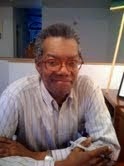
The newly-founded Rainbow Repertory Theatre proudly bills itself as a company whose aim is to develop and promote the plays of gay and lesbian playwrights of color. However, its artistic director Reginald Jackson, himself a playwright, does not "want to just appeal to the gay community."
In fact, Rainbow Rep's first offerings--Kids and Enormous Insignificancies (both directed by Jackson)--have more straight characters in them than gay. "We [as gay people] really don't live in a vacuum," explained Jackson, "so I don't see any purpose in doing pieces in a vacuum."
Both one-act plays will be presented back to back March 6 and 13[1988], starting at 7 p.m., at the Alonzo Players Theatre, 317 Clermont Avenue, Brooklyn, under the umbrella title: "Kuumba: A Night of New Theatre." (Kuumba means "creativity" in Swahili.)
Kids, a play with music by Charles Pouncy, deals with self-identity and self-acceptance. The focus is on two adolescent brothers--Jacob, who is openly gay to the point of being effeminate and David, who, when confronted by his mother, denies his homosexuality. "This would be a wonderful piece for gay and lesbian youth of color to come to," said the 24-year-old director, a native of Queens, "because Kids is about them. It's about me, too. I've lived it. But they're living it now. They've got no sense of validation."
While Kids, with its musical soliloquies and humorous touches, can be quite entertaining, its companion piece, Enormous Insignificancies by Hector Lugo, about a Puerto Rican playwright dying of AIDS, can be very unsettling. "What do you want me to do," asks Gaston, the playwright (played by Lugo), as he lay on a psychiatric couch, "go up to this man, the only human being who has been kind to me, who I love, and say I've got--I'm going to die and maybe you've got it, too? I can't, I can't, I can't."
Enormous Insignificancies, recalled Jackson, "was originally done at City College for the one-act festival last year. I didn't see it, but I knew Hector. We were at the college together. [After reading the script], I told him if he was interested in rewriting it, I would consider doing it."
Although the playwrights involved with Rainbow Rep must be gay or lesbian, that rule does not apply when Jackson goes about the task of selecting the cast. "There are 11 people in the total production--five gays and six straights, at least that is their public image. I'm not going to pull people who are in the closet, out of the closet. My political stance is that I don't particularly condone being in the closet, but artistically it's irrelevant. As far as I'm concerned, the actors are asexual on stage. The audience shouldn't be trying to figure out who's gay and who's straight. That defeats the purpose."
A future project waiting in the wings is "a theatrical dialogue" between gay men and lesbians. "It'll be two different pieces," said Jackson,"running about 45 minutes each, comprised of poetry and prose exploring how we feel about each other, what are the myths, the stereotypes, the misconceptions, the questions, the fears that affect the whole relationship. I've got ideas on what I think will probably come up in it, but I have no idea what the overall gist or structure will be." That would be left up to the poets and playwrights "who would get together on a Saturday or a Sunday for three hours, four hours," continued Jackson, and "brainstorm" on how they would "create the written work into a theatre piece; linking the pieces and building a script."
This article was originally published in the Philadelphia Gay News (March 11, 1988).
Showing posts with label Hispanic Gays and Lesbians. Show all posts
Showing posts with label Hispanic Gays and Lesbians. Show all posts
Monday, November 26, 2012

Wednesday, October 24, 2012
"Growing Up, Out, And Powerful": An Excuse To Rant
Alternating between militancy and humor, Growing Up, Out and Powerful is a semi-improvisational, autobiographical theatre piece. "[Its intent is] to detail and dramatize the process of becoming a sane, healthy, lesbian/gay, progressive person of color in a world that tends to be otherwise," said John Patterson, the director.
Through poetry, songs, monologues, and discussion, the five performers (Patterson, Colin Robinson, Pam Lewis, Nestor Millan, and Lourdes Perez) attempt to fulfill that promise.
It runs through June 27 [1987] at the Castillo Cultural Center, 7 East 20th Street, in Manhattan, in six evening performances. Each of those shows spotlights different guest poets, and is part of an overall celebration of Gay Pride Month.
Of the five, Patterson was the only experienced actor, which was obvious--he was the one who gave an unstilted, self-confident, and joyful performance.
Surrounded by the audience on three sides, Patterson and company occupied a sparsely furnished set that represented, said the press release, a living room in a railroad flat. Frankly, I couldn't tell where it was supposed to be.
Initially, the dialogue was lively and humorous as they exchanged reminiscences about being black or Latino homosexual adolescents. After about the first 20 minutes, the show began to go downhill. With the exception of Patterson, the autobiographies began to ramble; nothing significant was said. Other problems I found annoying were Nestor Millan's heavily accented English which made it hard to understand him and Pam Lewis's soapbox histrionics. In addition, the show ran close to three hours, with no intermission. It should have been cut to 90 minutes, have as its main focus the lives of three people, not five, and have a more cohesive structure.
As for the special guests--poets Cheryl Clarke and Jewelle Gomez, on the night that I attended--they should not have been isolated in a separate segment but integrated among the regular cast members in a five-minute cameo appearance. In so doing, they would have been given the chance to share a few lines of poetry as well as some thoughts in a manner that would not have destroyed the theatre piece's continuity.
It became apparent to me that Growing Up, Out, and Powerful was an excuse to put forth political ideas endorsed by the New Alliance Party, the left-leaning group that runs the Castillo Cultural Center. But then again, that fact should come as no surprise to anyone familiar with NAP and their tactics.
This article was submitted to the New York Amsterdam News on June 19, 1987. It was not published.
Through poetry, songs, monologues, and discussion, the five performers (Patterson, Colin Robinson, Pam Lewis, Nestor Millan, and Lourdes Perez) attempt to fulfill that promise.
It runs through June 27 [1987] at the Castillo Cultural Center, 7 East 20th Street, in Manhattan, in six evening performances. Each of those shows spotlights different guest poets, and is part of an overall celebration of Gay Pride Month.
Of the five, Patterson was the only experienced actor, which was obvious--he was the one who gave an unstilted, self-confident, and joyful performance.
Surrounded by the audience on three sides, Patterson and company occupied a sparsely furnished set that represented, said the press release, a living room in a railroad flat. Frankly, I couldn't tell where it was supposed to be.
Initially, the dialogue was lively and humorous as they exchanged reminiscences about being black or Latino homosexual adolescents. After about the first 20 minutes, the show began to go downhill. With the exception of Patterson, the autobiographies began to ramble; nothing significant was said. Other problems I found annoying were Nestor Millan's heavily accented English which made it hard to understand him and Pam Lewis's soapbox histrionics. In addition, the show ran close to three hours, with no intermission. It should have been cut to 90 minutes, have as its main focus the lives of three people, not five, and have a more cohesive structure.
As for the special guests--poets Cheryl Clarke and Jewelle Gomez, on the night that I attended--they should not have been isolated in a separate segment but integrated among the regular cast members in a five-minute cameo appearance. In so doing, they would have been given the chance to share a few lines of poetry as well as some thoughts in a manner that would not have destroyed the theatre piece's continuity.
It became apparent to me that Growing Up, Out, and Powerful was an excuse to put forth political ideas endorsed by the New Alliance Party, the left-leaning group that runs the Castillo Cultural Center. But then again, that fact should come as no surprise to anyone familiar with NAP and their tactics.
This article was submitted to the New York Amsterdam News on June 19, 1987. It was not published.
Subscribe to:
Posts (Atom)