Wednesday, December 23, 2020

Some Random Thoughts

Now that winter is here, the one good thing about it is I don't have to worry about a container of ice cream melting before I get home.


Is there an app for locating public restrooms in  New York City?


Maybe one day porn DVDs--gay, straight, and bisexual--will feature audio commentaries by the models and the directors and have behind-the-scenes footage. They already feature trailers. Also, will 3D porn movie theatres be the next craze?


Isaac Hayes and Lou Rawls began some songs with a long monologue. Shouldn't they be considered the first real rappers?


Have the people who call New York the world's greatest city been to every city in the world?  That's like a restaurant having a sign in the window that says "We Have The Best Hamburgers In Town." Have they eaten in every restaurant in town? How do they know?


When a pharmacy puts the word "Chemists" in their name, it sounds like they have test tubes and other lab equipment in a back room.


Mad Men, the dramatic television series about the advertising business in the 1950s and 1960s, during its seven-season run on AMC, took viewers back to a time when men knew how to dress: fedoras, three-piece suits, cuff links, and shoes, not Nike sneakers.

Saturday, December 12, 2020

A Black Gay Poet Struggles Against Adversity

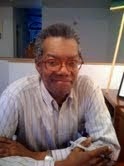
 Pressin' My Way (Shady Facts, $10) is a self-published book by Lawrence DeWyatt Abrams containing honest, vivid, and brave poems about what it means to be a double threat in contemporary America--black and gay.

In the lengthy introduction (which could use considerable cutting), a 27-year-old Harlem resident, writes that "it has been my words that have provided a healing salve for my most wounded spaces" and "very often [poetry] is the only thing that stands between me and insanity."

This rising young poet, who heads Gay Men of African Descent (GMAD), has created a book about spirituality, sexual identity, and love.

Among the best poems in Pressin' My Way are the comical "Fairy Queen" ("Take off those high heels/go in the bathroom/find some ivory/and wash your face/'cause blue is not your color."); the terrifying "Edge" ("Razor blade, you and I are old friends"); and "Somewhere Under the Bridge," the beautifully written homage to the late African-American poet Donald W. Woods, Abrams's mentor.

Despite adversity in its many guises, Larry Abrams reveals in this very slim volume (53 pages) that he is more than willing and able to continue to press his way.

Note: This article was originally published in the Manhattan Spirit newspaper on March 15, 1996  as part of its monthly Manhattan Pride lesbian and gay supplement.


Saturday, December 5, 2020

Gay And Lesbian Audiobooks

Ron Hall of Seattle [in 1996] launched the first audiobook publishing company in the United States to specialize in gay and lesbian fiction.

The Hall Closet Book Company, thus far, has published only two mystery titles, available for sale or 30-day rental (with an option to buy): Fadeout, Joseph Hansen's first book in the Dave Brandstetter series and Hallowed Murder by Ellen Hart, from her Jane Lawless series.

Among the five books Hall Closet plans to bring out on audiotape this year are The Gifts of the Body by Rebecca Brown (a March release) and Blackbird by the African-American novelist Larry Duplechan.

All of the audiobooks, which Hall calls "dramatic reads" because the readers provide each character with his or her own voice, are unabridged. In a Seattle newspaper interview, Hall, a former bookstore manager, stated that he prefers offering books this way so that "the listener gets every word the author wrote, all the subplots and character developments, settings, and motives. It's a much richer experience."

Unfortunately, none of the tapes were made available for review in this column.


Note: This article was originally published in the Manhattan Spirit newspaper on March 15, 1996 as part of its monthly Manhattan Pride lesbian and gay supplement.

Thomas A. Dorsey, The Father of Gospel Music

Thomas A. Dorsey (1899-1993), who wrote more than a thousand gospel songs, among them "Take My Hand, Precious Lord," "If We Never Needed the Lord Before (We Sure Do Need Him Now)," and "Peace in the Valley," was called "the father of gospel music," a title he rightfully earned.

His most famous composition, "Take My Hand, Precious Lord," became Dr. Martin Luther King, Jr.'s favorite. The classic song has been translated into more than fifty languages. Dorsey wrote it following the death of his first wife who died during childbirth. The child too died shortly after birth. The song's words mirrored Dorsey's feelings of grief and depression.

Born in Villa Rica, Georgia, Dorsey, when he was in his teens, played the blues on the piano in bordellos, a fancy name for whorehouses. He later composed several blues and jazz tunes and became known by his stage name, Georgia Tom. According to Wikipedia, "In 1923, he became the pianist and leader of the Wild Cats Jazz Band accompanying Gertrude "Ma" Rainey, a charismatic and bawdy blues shouter who sang about lost love and hard times."

Dorsey created the term "gospel music," merging elements of the blues and the spiritual. So people who consider the blues the Devil's music should be reminded that its presence is in gospel music, thanks to Thomas A. Dorsey.


Note: This blog post is based on an unpublished biographical sketch I recently found. I wrote it on February 15, 1993. Some changes to the original have been made. I hope to do more research on Dorsey's life and musical career.

Wednesday, November 25, 2020

New York In The Before Times

Watching the marvelous 2006 movie The Devil Wears Prada makes me long for the New York of the before times, meaning the pre-COVID-19 New York.

In the movie, starring Meryl Streep, we see people on the streets, in restaurants, fashion shows, art galleries, and in the workplace (the offices of the fashion magazine Runway) without a face covering, without social distancing, without a single hand sanitizer dispenser in sight.

If only we could bring back that New York ASAP!

Saturday, November 14, 2020

Donald Trump Will Not Be The Forgotten Man

On the sidewalk at the northwest corner of Broadway and 110th Street and the sidewalk at the northeast corner of Broadway and 106th Street on the Upper West Side of Manhattan, someone wrote with a blue marker pen this message: "IT'S A BEAUTIFUL DAY 11-07-20." Obviously, it was to commemorate Joe Biden's defeat of Donald Trump in the 2020 presidential election.

But despite our elation over Trump's defeat, we shouldn't forget that that doesn't mean he will fade away. It just means he will no longer occupy the White House and that he will no longer be in power.

You can be sure his presence will be felt in other ways via Twitter, rallies, conservative talk radio, etc., criticizing and belittling Biden and the Democrats every chance he gets.

Trump will definitely refuse to go gently off the stage. His enormous ego will not allow it.

Monday, November 9, 2020

Encouraging The Reading Of Books Via A Tote Bag

This past summer, a young black woman stood in line about three or four people ahead of me, outside the Trader Joe's supermarket on Columbus Avenue, near 93rd Street, in Manhattan. She carried a canvas tote bag that was printed on the side with this message: "Reading Can Seriously Damage Your Ignorance." In the center of the words was a drawing of an open book.

Being a book lover, the message struck a chord with me. I thought it was a wonderful way to promote the reading of books and to celebrate the life of the mind.