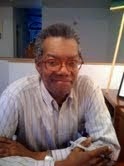
Ben Carson, the new secretary of Housing and Urban Development in the Trump administration, may need to bone up on American history, especially that part dealing with slavery.
Carson told a roomful of federal employees, presumably all of them employed at HUD, that "There were other immigrants who came here in the bottom of slave ships, worked even longer, even harder for less. But they, too, had a dream that one day their" descendants "might pursue prosperity and happiness in this land."
A Washington Post report, published in the daily free paper amNew York (March 7, 2017) noted that his comments provoked "an uproar on social media."
It seems that Carson is unaware that an immigrant is someone who chooses to leave one country to settle somewhere else.The African slaves who were brought to America didn't have that option. Therefore they were not immigrants.
Saturday, March 11, 2017

Saturday, March 4, 2017
James Baldwin's Former Home In Greenwich Village
Last month, I went to Film Forum to see I Am Not Your Negro, Raoul Peck's extraordinary Oscar-nominated feature-length documentary. It is based on James Baldwin's outline for a book that was never completed. The book was to be about the civil rights movement, American race relations, and the assassination of his friends, Medgar Evers, Malcolm X, and Martin Luther King, Jr.
After seeing I Am Not Your Negro, I went to the men's room. On my way out, I saw several pieces of film-related literature. The only exceptions were some cards distributed by the Greenwich Village Society for Historic Preservation. In the center of each card was a color photograph of the bronze plaque placed by this organization on the facade of 81 Horatio Street. The plaque commemorates James Baldwin, who lived in the building from 1958 to 1961.
One of Baldwin's biographers, W.J. Weatherby, mentioned this residence in the biography and wrote that "Baldwin's apartment was two flights up in a rather drab building." Despite the building's drabness, this was one of the places where he wrote the novel, Another Country, published in 1962.
This townhouse, noted the card, "is a touchstone to Greenwich Village's history as an artist incubator, a progressive refuge, and an inclusive haven."
There is a Google map on the reverse side that has a long red line that extends from Film Forum's location on Houston Street to the Horatio Street building."Visit today," encouraged the historic preservation society via the message on the card, "and pay your respects to one of the Village's greatest and most influential residents." (www.gvshp.org)
I haven't visited the site yet, but I intend to when the weather gets warmer.
Saturday, February 25, 2017
Writer Jamaica Kincaid Wins A Prestigious Israeli Award
The Forward, a New York-based weekly Jewish affairs newspaper, reported in the February 24, 2017 issue that Jamaica Kincaid, a New Yorker magazine staff writer and the author of several novels such as Annie John and a short-story collection called At the Bottom of the River, won the Dan David Prize, "a prestigious Israeli prize in recognition of her cultural impact and literary accomplishment."
Kincaid, born in 1949, on the tiny Caribbean island of Antigua, has written novels, noted the Forward, that "touch on [the] themes of colonialism, blackness, womanhood, depression and displacement."
She converted to Judaism following her marriage to composer and pianist Allen Shawn, a son of William Shawn, the late editor of The New Yorker. They are now divorced.
Kincaid is currently a professor of African and African American studies at Harvard University.
Saturday, February 18, 2017
A Movie Studio Grows In The South Bronx
On December 27, 2012, I posted on this blog an unpublished letter-to-the-editor that I wrote in July 1977 in which I suggested that the abandoned buildings in the South Bronx be torn down and replaced by "a huge television and motion picture sound stage."
Forty years later, that sound stage in the South Bronx has come into existence and is called Silvercup Studios North.
My suggestion was way ahead of its time.
Forty years later, that sound stage in the South Bronx has come into existence and is called Silvercup Studios North.
My suggestion was way ahead of its time.
Tuesday, February 14, 2017
Turning Church Property Into Condos
According to the New York Daily News (February 4, 2017), two churches in Harlem that merged years ago--Mount Calvary United Methodist Church and St. Mark's Methodist Church--sold Mount Calvary's former (and now rarely used) worship site to a developer for the hefty sum of $7.5 million.
Pastor John Carrington stated in the paper that selling the building, located at Edgecombe Avenue and 140th Street, "enables the church to have money to do more service for the community, as well as for itself."
Here's the problem: the developer plans to turn the church building into condos instead of affordable housing, something urgently needed in Harlem, which is becoming more and more gentrified.
The pastor may want to use the money "to do more service for the community," but if all the churches in Harlem sold their properties to developers, there won't be a community for them to serve.
Happy Valentine's Day!
Saturday, February 11, 2017
Federal Troops In Chicago Won't Solve Social Problems
President Donald Trump said that he would send federal troops to Chicago if the murder rate there kept increasing. The truth is the National Guard can only do so much to quell urban violence. The social ills in the black community of Chicago are so deep-seated and have existed for so long that a law-and-order approach can only have limited results. The presence of federal troops might even exacerbate the situation. It will take a slew of people--social workers, religious and civic leaders, psychologists, educators, corporate leaders, and others--to deal with the underlying causes of violence in Chicago and anywhere else. These problems did not occur overnight and they won't be eradicated overnight. To expect a law-and-order solution to be a quick fix is to be living in a fantasy world.
Monday, February 6, 2017
Should "Hidden Figures" Be Turned Into A Broadway Musical?
It came as no surprise when I read via the Los Angeles Times website (January 24, 2017) that Allison Schroeder, the co-screenwriter of Hidden Figures, is "eager to turn [the film] into a musical." Something told me that would be the next version presented to the public.
I can see the film as a stage play or as a graphic book. But as a story told through singing and dancing, that's hard for me to picture. To me that would degrade and trivialize the monumental achievements and sacrifices of the African American female mathematicians who worked at NASA.
I can see the film as a stage play or as a graphic book. But as a story told through singing and dancing, that's hard for me to picture. To me that would degrade and trivialize the monumental achievements and sacrifices of the African American female mathematicians who worked at NASA.
Subscribe to:
Posts (Atom)