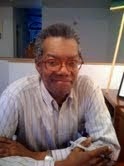
Bob Lederer, a gay activist involved in the white anti-imperialist movement, faces imprisonment if he refuses to testify before a federal grand jury investigating, among other things, a series of 1983 bombings of federal buildings by revolutionary groups.
Lederer, who is employed as a legal secretary, is media coordinator of the New Movement in Solidarity with Puerto Rican Independence and Socialism, a group of white North American supporters of Puerto Rican national liberation.
On March 27, 1985, four men whom Lederer assumed to be FBI agents served him with a subpoena at his place of work. "The one who handed the subpoena," says Lederer, "whipped out his FBI badge. He didn't introduce the other three. They might been FBI, they might have been NYPD [working with the FBI as part of the Joint Terrorist Task Force].
The subpoena ordered Lederer to come to Washington, D.C. May 2 [1985] to tell what he knows about the anti-imperialist movement in the U.S. The grand jury is investigating the November 1983 bombing of the Capitol building, shortly after the invasion of [the Caribbean island of] Grenada , as well as earlier bombings that year that involved military targets, among them a computer center. Two groups, the Red Guerilla Resistance and the Armed Resistance Unit, claimed responsibility for those attacks.
Four activists, current and former members of the John Brown Anti-Klan Committee (Steven Burke, Julie Nalibov, Christine Rico, and Sandra Roland), are already serving time for being grand jury resisters in this matter. They have voiced support for the bombings but deny any knowledge of the groups behind them. In a joint statement, they announced that they "send our love to Terry Bisson [an Anti-Klan member also subpoenaed March 27] and Bob Lederer who are continuing the struggle as grand jury resistors.[sic]."
Lederer whose work in the Puerto Rican movement has made him a target for government surveillance, plans to refuse to testify. He says: "Grand juries are a tool that's completely under the control of the prosecutor. There's no right to have a lawyer there. When it's a political grand jury investigating a political movement, I believe it's an absolutely essential thing for any person who has any kind of awareness of what this country does, what it stands for, how the FBI has been used over the years, can never give any information no matter how innocuous they think it is, no matter how much they quote unquote don't know anything. Because in political case, when the FBI says its investigating an activity by an underground movement, anything they can get from you, even if it's saying you don't know, that you know certain people but not other people, that helps them to complete a very sophisticated computer profile that they've been building about every person in the movement."
The 30-year-old activist vows that he will "never cooperate with the FBI. They don't have the legal power to subpoena people so they use this rubber stamp relationship between prosecutors and grand juries, to virtually get subpoena power without legally [having] it."
His refusal will lead to either of two consequences: civil contempt or criminal contempt. Lederer explains the terms: "The theory behind [civil contempt] is that you are being held not as punishment but as a coercive measure with the hope that the time that you are in jail they will put so much pressure on you from how unpleasant it is that you'll change your mind and agree to testify. And then you're immediately released if you agree to answer all of the questions. If you then balk and say 'I'll answer some but not others,' then you'll be right back in jail. Criminal contempt is an acknowledgment by the government that this person has made it clear from their political stance that they will never, ever testify. You can put them in jail for 10 years and they wouldn't testify. So instead of the idea of 'We're trying to put pressure on them,' it's openly saying 'We're punishing them for not testifying.' You get charged with a felony called criminal contempt. You have a trial which is a farce because the only issue in the trial is: Did you or did you not follow the judge;s order to testify?"
A civil contempt charge would mean that a resister would remain in jail for the duration of the grand jury's term of 18 months. It is conceivable, says Lederer, for another grand jury to be called and, if the resister still refuses to talk, stay in jail an additional 18 months. A jail term for criminal contempt, on the other hand, would be indefinite, which would include a possible life sentence, if the judge wanted it that way, explains Lederer.
The product of what he describes as "a comfortable white middle class \" family, Lederer, who grew up in Wheaton, Maryland, became politically active during his students days at the University of Maryland. "My college experiences s opened my eyes beyond this attitude that America is great because they welcomed part of my family as Jews into the mainstream which is true, they did." But, he continues, "When I began meeting [African-American] people and African people" that was when "I understood that things are not so nice and comfortable for the majority of people in the world, thanks to the role of the United States in [their] exploitation."
This is an excerpt from an article that was published in the New York Native in 1985.
Showing posts with label political movements. Show all posts
Showing posts with label political movements. Show all posts
Saturday, February 2, 2013

Subscribe to:
Posts (Atom)